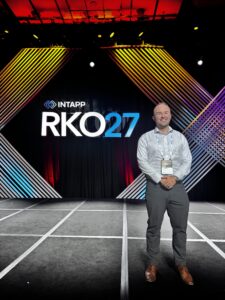

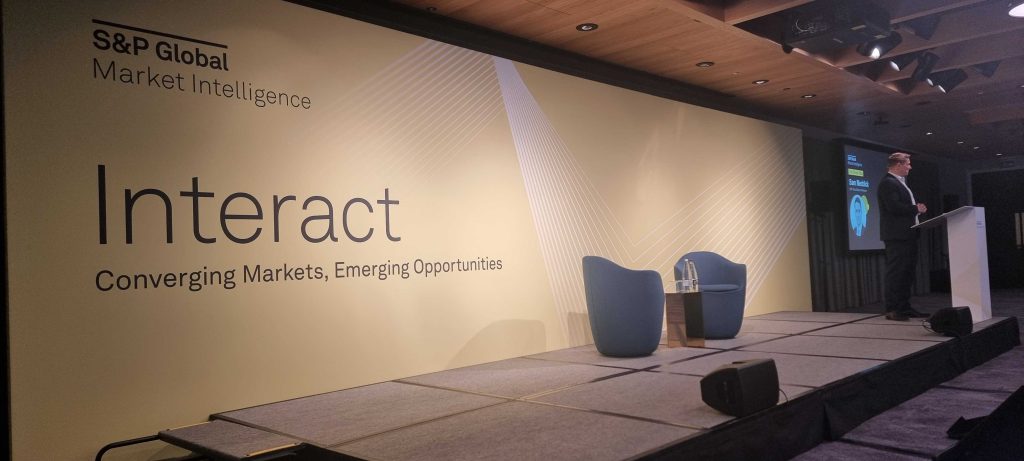

A day well spent at S&P Global Market Intelligence Interact London 2026 by Tilly Wijesuriya and Connor Tompsett, hosted by S&P Global Market Intelligence and centred around the iLEVEL ecosystem. The conference surfaced a set of themes that felt less like predictions for the future and more like a reality check on the present.
What stood out most wasn’t a breakthrough technology or a bold new framework. It was something far more consistent across every conversation in the room: the firms pulling ahead are not necessarily doing anything extraordinary on the surface. They are simply doing the unglamorous work early, and more importantly, doing it properly.
The foundation problem private markets can no longer avoid
Across conversations, the same types of firms kept coming up as examples of “getting it right.” Not because they had the most advanced tools, but because they had invested early in the basics:
- Data standardisation that actually holds under pressure.
- Governance frameworks that define how data is created, maintained and used.
- Clear ownership structures that remove ambiguity about responsibility and systems of record.
These are not new ideas. What has changed is their consequence. In a world where AI is becoming operationally accessible, those foundations are no longer optional infrastructure. They are the difference between firms extracting value today and firms still stuck in experimentation cycles.
When things go wrong early, the lesson is clarity and not blame
One of the most instructive moments came from the customer panel featuring Kartesia. Their experience was refreshingly direct: they chose the wrong platform initially.
Rather than treating it as a sunk cost of embarrassment, they made a decision within six months to reset and rebuild.
The key takeaway was not about vendor selection. It was about the questions that should have been asked before go-live:
- How will we actually get information?
- Who is responsible for it at each stage?
- Where will it live and why?
- How will we audit it when things inevitably change?
These are simple questions, but in practice they are often delayed until after systems are already embedded. By then, they are significantly harder to fix.
This is an area where it|venture can help: bringing that early clarity and structure to ensure the right questions are asked before decisions become hard to unwind.
Valuations: quality is no longer negotiable
Another moment that landed clearly was the candid discussion around valuations. The consensus in the room was blunt: if forced to choose between timeliness and quality, quality wins.
The reasoning is no longer theoretical. It is operational:
- LP scrutiny is increasing.
- Semi-liquid strategies require monthly NAV discipline.
- Regulatory expectations continue to tighten.
In that context, a valuation that lacks robustness is not just imperfect, it is unusable. The phrase “not worth the paper it is written on” was echoed more than once, and without irony.
Data standardisation is only half the story
The GP/LP-focused sessions reinforced an important nuance that is often overlooked. Standardised performance data enables comparability, but comparability alone is not enough.
Without interpretation, data does not influence decisions. It does not move investors. It does not support exits.
The firms making the most progress are those turning structured data into narrative: connecting performance signals into a coherent story that LPs can understand and trust.
AI is not the differentiator. Your foundation is
AI was present in almost every session, but not in the way marketing narratives often suggest.
The practitioner consensus was clear: AI does not fix operating models. It amplifies them.
- Strong data infrastructure becomes more powerful.
- Weak processes become more visible.
In other words, AI accelerates maturity, not transformation. That distinction matters.
Trust matters
Another interesting moment from the conference was when Jamie Redknapp took the stage for his keynote Q&A. What was particularly striking was how naturally his experience in football translated into a business context.
Drawing on his experience as both a player and pundit, Redknapp spoke about performing under pressure, the importance of trust within teams, and how consistency and communication often matter more than individual talent. The parallels with private markets operations were difficult to ignore: strong outcomes are rarely driven by isolated brilliance, but by aligned teams working with clear ownership, visibility, and confidence in the information in front of them.
When tackling any major project, leaders need to be trusted to lead and make decisions, but they also need to trust their teams. High-performing environments depend on clarity of roles, transparency, and insight across the organisation.
Where this leaves private markets operations
Across all sessions, the same conclusion emerged in different forms: operational discipline is now strategic advantage.
This is where we see the work playing out day to day at it|venture. We help firms in private markets move beyond implementation into real operational readiness. That includes integration, governance design, and the unglamorous but essential foundations that determine whether platforms like iLEVEL actually deliver value in practice.
The technology landscape is evolving quickly. But the differentiator is becoming increasingly stable: firms that invest in clarity, ownership and data discipline early are the ones best positioned to benefit from everything that comes next.