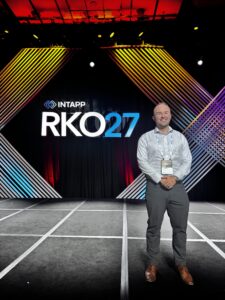



On 25th June, Tilly Wijesuriya and Terrell Glen attended at The Private Markets Forum Technology Summit in London, one theme surfaced repeatedly – framed differently across panels, but fundamentally the same challenge:
- Everyone agrees private markets need a common data record.
- No one agrees who should own it.
This tension isn’t new, but it’s becoming increasingly urgent as the industry continues to evolve, scale and modernise.
The hidden cost of “noise” in reconciliation
Across cThe scale of the challenge was brought into sharp focus during discussions at the summit.
One fund-of-funds manager, overseeing more than 160 underlying funds, highlighted the operational complexity involved in managing data across multiple sources and stakeholders.
Separately, another industry participant estimated that roughly three-quarters of daily cash reconciliation breaks are not true errors – they’re noise.
This is a striking figure, not because reconciliation challenges are unexpected, but because of what it reveals:
- A significant proportion of operational effort is spent resolving discrepancies that don’t materially matter.
- Data inconsistency is creating friction across processes and stakeholders.
- Efficiency gains are being lost not to complexity alone, but to fragmentation.
At an industry level, this represents a meaningful drag on scalability and performance.
Technology is not the limiting factor blame
One of the most instructive moments came from the customer panel featuring Kartesia. Their experience was rWhat makes this challenge more compelling is that the technology to address it already exists.
Across the market, there are tools capable of:
- Automating reconciliation processes.
- Standardising data formats.
- Improving visibility across systems.
Yet the gap between capability and reality remains wide.
The reason is simple: this is not a technology problem; it’s an alignment problem.
The ownership dilemma
At the centre of this issue lies a fundamental question:
Who owns the “golden source” of data in private markets?
Several stakeholders have a legitimate claim:
- Fund administrators manage and process operational data.
- Custodians provide oversight and safekeeping.
- Technology platforms aggregate and structure information.
- Allocators rely on data for reporting, analysis and decision-making.
Each plays a critical role. Yet none, individually, has emerged as the definitive owner.
The result is a fragmented ecosystem where:
- Multiple versions of the truth coexist.
- Reconciliation becomes continuous rather than occasional.
- Processes depend on coordination rather than standardisation.
Until this question of ownership is resolved, or redefined; the industry will continue to operate with structural inefficiencies.
Data standardisation is only half the story
The GP/LP-focused sessions reinforced an important nuance that is often overlooked. Standardised performance data enables comparability, but comparability alone is not enough.
Without interpretation, data does not influence decisions. It does not move investors. It does not support exits.
The firms making the most progress are those turning structured data into narrative: connecting performance signals into a coherent story that LPs can understand and trust.
AI is raising the stakes
The discussions around artificial intelligence added another layer of urgency.
As AI-driven tools and agents become more capable, the nature of value in technology is shifting.
If dashboards, analytics and interfaces can be generated on demand, then they are no longer the differentiator. Instead, the competitive advantage moves upstream.
The real asset becomes the integrity of the underlying data.
More specifically:
- Data lineage.
- Auditability.
- Consistency across systems.
In this context, poor data foundations are no longer just inefficient: they become a barrier to leveraging AI effectively.
Without trusted data, even the most advanced tools will produce unreliable outputs.
Why platform-agnostic infrastructure matters
Another interesting moment from the conference was when Jamie Redknapp took the stage for his keynote Q&A. What was particularly striking was how naturally his experience in football translated into a business context.
Drawing on his experience as both a player and pundit, Redknapp spoke about performing under pressure, the importance of trust within teams, and how consistency and communication often matter more than individual talent. The parallels with private markets operations were difficult to ignore: strong outcomes are rarely driven by isolated brilliance, but by aligned teams working with clear ownership, visibility, and confidence in the information in front of them.
When tackling any major project, leaders need to be trusted to lead and make decisions, but they also need to trust their teams. High-performing environments depend on clarity of roles, transparency, and insight across the organisation.
Where this leaves private markets operations
In a market where:
- No single stakeholder clearly owns the data.
- No consensus exists on a “winning” platform.
- The ecosystem continues to evolve.
Building around a single system or provider introduces long-term risk.
Platform-agnostic approaches, by contrast:
One conclusion worth drawing from these discussions is the growing importance of platform-agnostic infrastructure.
- Allow interoperability across systems.
- Reduce dependency on any one vendor.
- Enable flexibility as the market matures.
Perhaps most importantly, they avoid forcing premature decisions in an industry that is still defining its future structure.
What comes next?
The conversations in London made one thing clear:
- The private markets industry does not need more tools; it needs alignment.
- The challenge is not a lack of innovation, but a lack of agreement on how that innovation should be applied and governed.
- As firms continue to scale and new technologies, particularly AI accelerate change, the importance of resolving data ownership will only increase.
Those who succeed will not necessarily be those with the most advanced platforms, but those who can:
- Establish trust in their data.
- Navigate fragmentation effectively.
- Build flexible, future-ready infrastructure.
The question of “who owns the data” remains open. However, one thing is certain: how the industry answers it will shape the next phase of its evolution.