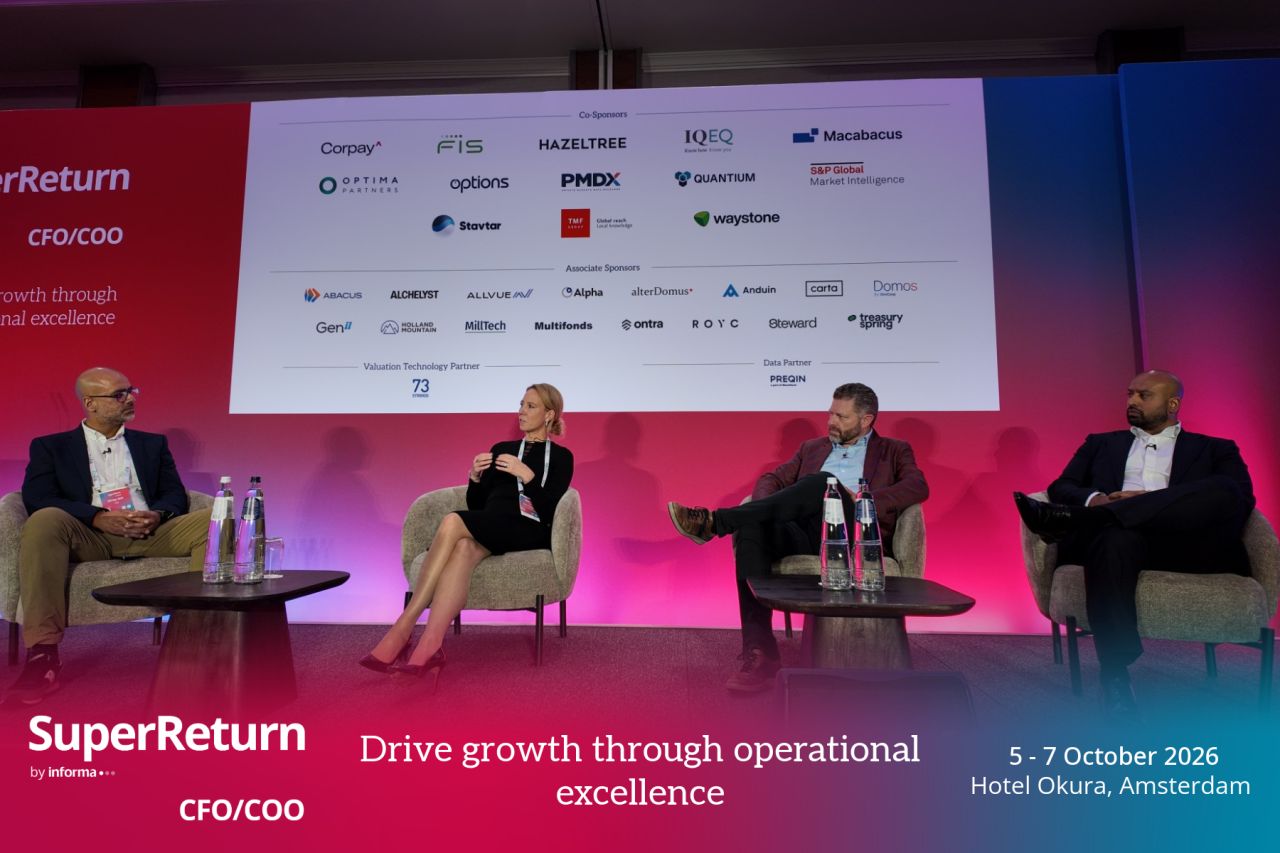


Following three days at SuperReturn CFO/COO in Amsterdam, one thing became clear: private markets firms are facing increasingly connected challenges around technology, data and operational efficiency.
Across sessions and conversations, the discussion was not simply about which new technologies firms should adopt. It was about how to make better technology decisions, where AI can genuinely deliver value and whether the underlying data and operating models are ready to support it.
Several themes stood out.
1. AI is changing the build vs. buy conversation
Build vs. buy has long been a consideration when firms assess their technology stacks, but AI is changing the nature of that decision.
The ability to develop technology internally is evolving, potentially making the build route more attractive for certain use cases. However, an important question came up repeatedly at SuperReturn:
If a firm decides to build, is it prepared for the responsibilities that come with becoming a product owner?
Building a solution is only the beginning. Firms also need to consider ongoing ownership, maintenance, governance, support and how the solution will evolve alongside the business.
The decision is therefore about more than initial development cost or speed. It is about whether an organisation has the capabilities and commitment to manage what it builds over the longer term.
For private markets firms, that makes the relationship between technology decisions and the wider operating model increasingly important.
2. AI adoption is a priority, but knowing where to start remains a challenge
Another recurring theme was the pressure organisations feel to progress their AI adoption.
Many firms recognise the potential and are conscious of not falling behind. Yet one of the challenges discussed was surprisingly fundamental: where should they begin?
The range of possible applications can make it difficult to identify which opportunities deserve attention first.
Rather than adopting AI for its own sake, firms need to understand where it can address a real operational problem and what a successful outcome would look like.
That might involve reducing repetitive work, improving access to information or supporting processes that currently depend on significant manual effort.
The important starting point is the business need, not simply the availability of a new model or tool.
3. All roads lead back to data
If there was one theme connecting many of the discussions, it was data.
Firms can invest in new technology and explore increasingly sophisticated AI capabilities, but the value they can unlock depends heavily on the information those systems use.
Without a unified, trusted source of truth, the potential of AI becomes harder to realise.
For organisations managing information across multiple platforms, teams and workflows, this is not a minor technical consideration. It affects reporting, operational processes and the confidence people can place in the outputs they receive.
AI does not remove the need to get the data foundations right. It makes those foundations even more important.
Before asking what AI can do, firms need to understand whether their data is sufficiently reliable, accessible and connected to support it.
4. Valuations are under increasing pressure
Beyond the technology discussions, valuations emerged as another area of growing operational focus.
Firms face pressure to deliver valuation outputs to investors more quickly, without compromising their quality or correctness.
The trend towards semi-liquid funds adds another dimension to this challenge, increasing the importance of efficient and dependable valuation processes.
This creates a difficult balance: improving speed while maintaining the controls, accuracy and confidence expected by investors.
Technology and automation may help firms improve parts of the process, but the underlying requirements for reliable data, clear workflows and appropriate review remain essential.
The opportunity is not simply to produce information faster. It is to improve the process while preserving trust in the result.
5. AI deployment needs ongoing management, not just implementation
As AI adoption develops, the conversation is also moving towards what happens after a tool has been introduced.
Three considerations are particularly important.
Change management
AI capabilities continue to evolve, as do the needs of the organisations using them. Firms need to think about how people, processes and controls will adapt over time, rather than treating deployment as a one-off project.
Commercial oversight
Not every task requires the most powerful or expensive AI model.
Firms need sufficient visibility and control over AI usage to assess whether the commercial investment is justified by the value delivered.
Questions around model selection, usage patterns and token costs are becoming part of the wider conversation about operational efficiency.
Governance and compliance
AI also creates important responsibilities around information security and client trust.
Firms need clear governance over how AI tools are used, what data they can access and how sensitive information is protected, particularly where public AI services are involved.
Without appropriate controls, the risks may outweigh the intended benefits.
What does this mean for private markets firms?
My biggest takeaway from SuperReturn CFO/COO is that these challenges cannot be treated in isolation.
Build vs. buy decisions affect long-term technology ownership. AI adoption depends on identifying the right use cases. Those use cases depend on reliable data. And successful deployment requires change management, commercial discipline and governance.
Meanwhile, operational demands such as faster valuations continue to raise expectations around the quality and speed of information.
For CFOs, COOs and technology leaders, the question is becoming less about how much technology an organisation has and more about whether its technology, data, processes and people work effectively together.
That is a conversation we spend a lot of time having at it|venture.
SuperReturn provided a valuable opportunity to hear how firms across private markets are approaching these challenges, and to compare the different priorities shaping their technology decisions.
The next step is turning those conversations into practical improvements.
Continue the conversation
Kyle Lindemann is Director, Client Solutions & Partnerships at it|venture. He works with private markets firms to understand operational and technology challenges and explore practical solutions across systems, data, integration and transformation.
If any of the themes from SuperReturn CFO/COO resonate with the challenges your organisation is facing, Kyle would welcome the opportunity to discuss them.